Selecting the right industrial flooring or platform material often comes down to a struggle between structural strength and environmental resilience. In corrosive atmospheres, traditional steel gratings fail rapidly, leading to expensive replacement cycles and potential safety hazards.
The shift toward composite materials has redefined how engineers approach load-bearing surfaces in chemical plants, wastewater treatment facilities, and marine environments. The core requirement is no longer just "strength," but the ability to maintain that strength while resisting chemical attack and oxidation.
For procurement managers and engineers, identifying reliable fiberglass grating suppliers involves understanding the intersection of polymer chemistry and structural engineering to ensure long-term operational stability.


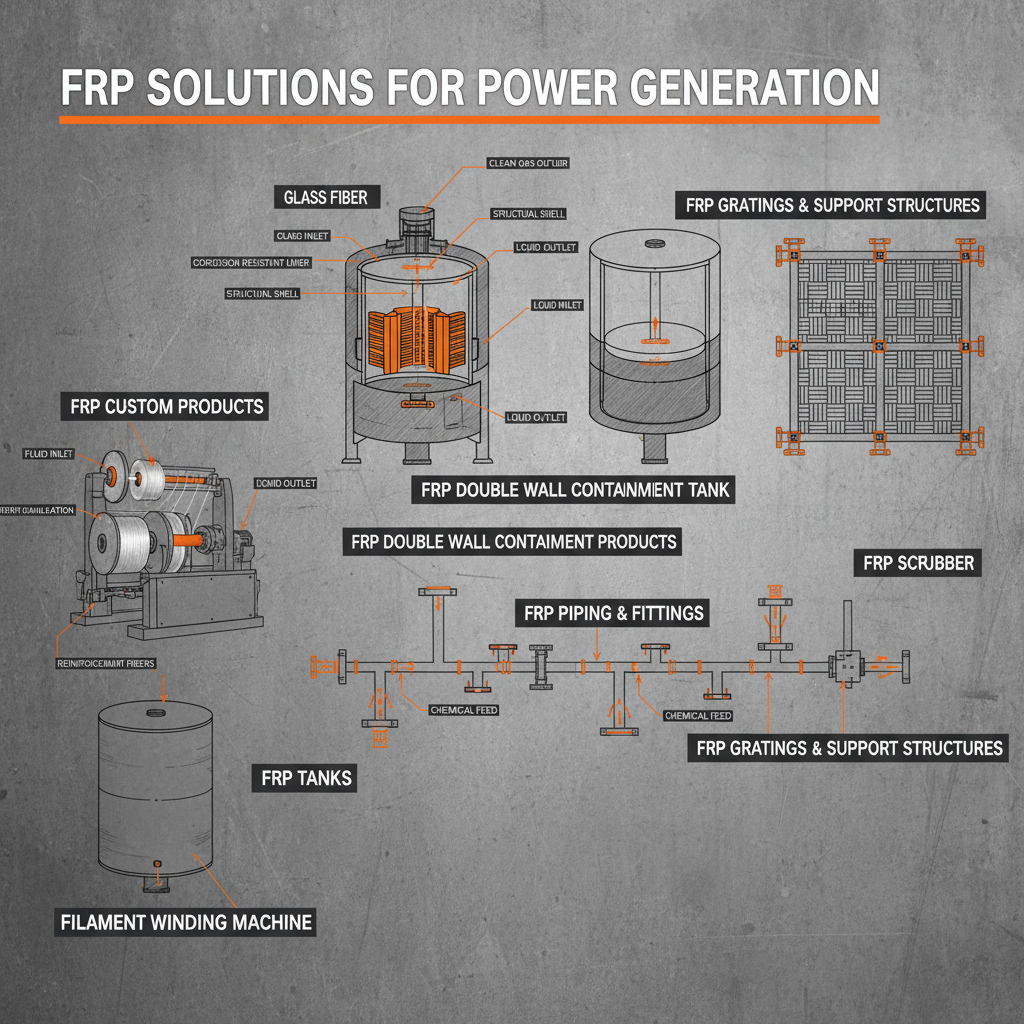
Fiberglass Reinforced Plastic (FRP) grating is a composite material consisting of a polymer matrix reinforced with glass fibers. Unlike homogeneous materials, this combination allows for the decoupling of strength and corrosion resistance. The glass fibers provide the necessary tensile strength, while the resin matrix—typically polyester, vinyl ester, or epoxy—protects the fibers and determines the chemical resistance of the finished product.
This synergy makes FRP an essential alternative to steel and concrete. By tailoring the resin type, manufacturers can produce gratings that survive exposure to strong acids, alkalis, and saltwater, which would otherwise degrade metallic structures within months.
When specifying grating for an industrial project, the focus must extend beyond mere dimensions. The resin chemistry is the primary determinant of longevity. For instance, orthophthalic polyesters are suitable for general-purpose use, but vinyl ester resins are required for high-corrosion environments where severe chemical splashes are common.
Another critical factor is the manufacturing process: molded grating versus pultruded grating. Molded gratings offer omnidirectional strength and high slip resistance due to a grit-top surface, whereas pultruded gratings provide superior unidirectional load-bearing capacity, making them more suitable for longer spans with higher weight requirements.
Finally, UV stability must be considered. Without a proper UV-inhibited topcoat, the resin can "bloom," exposing the glass fibers to the elements. This not only affects the appearance but can eventually compromise the structural integrity of the panel over several years of direct sunlight exposure.
The primary engineering advantage of FRP is its strength-to-weight ratio. In many applications, the objective is to minimize the dead load on the supporting structure without sacrificing the safe working load (SWL) of the walkway or platform.
The operational efficiency of FRP systems stems from the fact that they can offer mechanical strengths comparable to steel while weighing up to 80% less, significantly reducing installation costs and structural fatigue.
This weight reduction allows for faster installation using fewer personnel and lighter equipment. Furthermore, because the material does not require painting or galvanizing, the lifecycle cost is substantially lower despite a potentially higher initial material cost compared to carbon steel.
To objectively evaluate FRP against traditional materials, engineers use a relative performance index. This index accounts for factors such as corrosion resistance, installation speed, and long-term maintenance requirements.
The following data illustrates a conceptual comparison across five key industrial metrics, demonstrating where composite solutions outperform conventional options in harsh environments.
In a typical industrial setting, such as a chemical processing plant, FRP gratings are deployed in areas where sulfuric acid or caustic soda are present. In these zones, steel gratings would require frequent recoating and eventual replacement due to pitting and oxidation. FRP remains inert, ensuring that walkways remain structurally sound without unplanned outages for maintenance.
Similarly, in marine and offshore applications, the saline environment accelerates the corrosion of almost all metals. Fiberglass solutions provide a non-conductive and non-magnetic surface that is impervious to salt spray, making them ideal for oil rigs, piers, and boat decking where longevity and safety are paramount.
The industry is moving toward more specialized resin formulations. We are seeing an increase in the use of dual-laminate technologies—combining the strength of FRP with the extreme chemical resistance of thermoplastics like PVC or PVDF. This allows for the construction of components that can withstand the most aggressive media known to industrial processing.
Additionally, there is a growing focus on fire retardancy. Modern composite gratings are now engineered with specialized additives to meet stringent international fire codes (such as ASTM E84), reducing smoke development and flame spread, which is critical for indoor industrial facilities.
Sustainability is also becoming a driver. While FRP is a plastic-based product, its extended lifecycle—often lasting 3 to 4 times longer than steel in corrosive zones—reduces the total volume of material consumed and the energy spent on repeated replacements.
Choosing from various fiberglass grating suppliers requires a technical audit of their manufacturing capabilities. A supplier's ability to adhere to international standards such as ASTM, ISO, or DIN is a baseline requirement for safety-critical applications.
Expertise in engineering allows a supplier to offer more than just a catalog product. The ability to provide customized dimensions, specific resin grades, and calculated load-span tables ensures that the grating is neither under-engineered (risking failure) nor over-engineered (wasting budget).
Hengshui Jrain Frp Co., Ltd. exemplifies this approach by integrating a professional lab with ISO9001 quality management, ensuring that products like FRP piping, tanks, and gratings are manufactured according to ASME and BS EN codes.
| Evaluation Factor | Carbon Steel | Stainless Steel | Fiberglass (FRP) | Concrete |
|---|---|---|---|---|
| Corrosion Resistance | Low | Moderate/High | Excellent | Moderate |
| Weight (Relative) | Heavy | Heavy | Very Light | Very Heavy |
| Installation Effort | High (Welding) | High (Welding) | Low (Bolting) | Very High |
| Maintenance Cycle | Frequent Paint | Low | Minimal | Moderate |
| Electrical Conductivity | Conductive | Conductive | Non-Conductive | Low |
| Lifecycle Cost | High | Moderate | Low | Moderate |
Molded grating is produced by pressing resin and glass fibers into a mold, resulting in an omnidirectional structure that is highly slip-resistant and suitable for most general industrial walkways. Pultruded grating is pulled through a heated die, creating a unidirectional structure with significantly higher load-bearing capacity in the longitudinal direction, making it the preferred choice for longer spans where heavy loads are expected.
The choice depends on the specific chemicals present. For standard moisture and mild chemicals, orthophthalic polyester is sufficient. For environments involving strong acids, alkalis, or high temperatures, vinyl ester resin is recommended due to its superior chemical resistance. In extreme cases, dual-laminate options incorporating thermoplastics may be necessary to prevent resin degradation.
Yes, FRP grating is ideal for high-traffic areas. When specified with a grit-top surface, it provides excellent slip resistance even when wet or oily. Because it is durable and does not rust, it maintains its safety profile and structural integrity far longer than steel gratings in outdoor or industrial environments.
One of the most significant safety advantages of FRP is that it is an electrical insulator. Unlike steel, fiberglass grating does not conduct electricity, making it the safest choice for walkways around electrical substations, power plants, and areas where there is a risk of electrical leakage or sparking.
While the initial purchase price of FRP may be higher than galvanized steel, the total cost of ownership is typically lower. FRP eliminates the need for ongoing painting, rust treatment, and frequent replacements. When you factor in the reduced installation time and zero maintenance costs, FRP is often the more economical choice over a 10-year period.
Ensure your supplier complies with recognized international standards such as ASTM (American Society for Testing and Materials), ISO (International Organization for Standardization), and DIN. These certifications guarantee that the material has undergone rigorous testing for tensile strength, chemical resistance, and flame retardancy, ensuring the safety of the personnel using the installation.
The transition from traditional metals to composite FRP gratings is more than a material change; it is a strategic decision to reduce long-term operational risk. By prioritizing resin chemistry and structural design over initial cost, industries can eliminate the cycle of corrosion and replacement.
As the demand for safer, more durable industrial infrastructure grows, the role of professional fiberglass grating suppliers becomes critical in ensuring that every platform and walkway is engineered for the specific challenges of its environment.