
Premium stone drill bit for hard rock wholesale solutions
When tackling the most challenging geological formations, the efficiency of excavation depends heavily on the structural integrity and material composition of the drilling equipment. For procurement managers and site engineers, securing a reliable source for high-performance drilling tools is critical to minimizing downtime and reducing the cost per foot of drilling. Whether the objective is mining, geothermal exploration, or heavy construction, the ability to penetrate abrasive, high-compressive-strength strata requires tools engineered for extreme durability.
While traditional tooling often fails under the heat and pressure of hard rock, advanced composite-enhanced solutions and specialized alloys provide the necessary resilience. Understanding the synergy between tool geometry and material hardness is the key to optimizing penetration rates. This guide explores the technical requirements for heavy-duty drilling in hard rock environments and how specialized manufacturing capabilities can provide the precise solutions needed for wholesale industrial procurement.

Technical Challenges of Penetrating High-Compressive Strength Rock Formations
Drilling into hard rock, such as granite, quartzite, or basalt, presents a significant engineering challenge due to the extreme abrasiveness and compressive strength of the substrate. The primary failure modes for drilling bits in these environments include premature abrasive wear, thermal degradation of the cutting edge, and catastrophic impact fracturing. To counter these forces, tools must be designed with a focus on material toughness and thermal stability.
The interaction between the bit and the rock involves a process of crushing and chipping. If the tool's hardness is insufficient, the rock will erode the cutting face faster than the rock is removed. Conversely, if the tool is too brittle, the high-frequency vibrations and impact loads common in hard rock drilling will lead to chipping. Professional-grade tools utilize a combination of tungsten carbide inserts or polycrystalline diamond compacts (PDC) to balance these conflicting requirements.
Furthermore, heat dissipation is a critical factor. In deep-hole drilling, the friction generated at the bit-rock interface can reach temperatures that soften the binding matrix of the tool. Effective flushing systems and specialized coatings are employed to move cuttings away rapidly and keep the cutting face cool, ensuring a consistent rate of penetration (ROP) and extending the overall service life of the equipment.

Material Engineering and the Role of Composite Reinforcement in Heavy Industry
While the cutting face of a drill bit requires extreme hardness, the body and supporting structures must possess high strength-to-weight ratios and corrosion resistance. This is where advanced materials, such as Fiber Reinforced Plastic (FRP), play a pivotal role in the broader drilling infrastructure. Although not used for the cutting edge itself, FRP is essential for the protective casings, conduits, and structural supports that house drilling machinery in corrosive or chemically aggressive environments.
Using high-performance resins and E-glass fiber reinforcement, manufacturers can create components that are virtually immune to the corrosive salts and acids often encountered in mineral exploration. This prevents the structural degradation of the drilling rig, ensuring that the force applied to the drill bit is consistent and axial, which is vital for preventing bit deviation and premature failure.
Modern engineering utilizes Finite Element Analysis (FEA) and Auto CAD to design these supporting structures. By simulating the stress loads and vibrations associated with hard rock drilling, engineers can optimize the wall thickness and reinforcement patterns of the equipment. This integrated approach ensures that the entire drilling system, from the heavy-duty bit to the structural supports, is synchronized for maximum operational efficiency.
Buyer's Guide for Wholesale Procurement of Hard Rock Drilling Tools
For those seeking stone drill bit for hard rock wholesale, the evaluation process should move beyond unit price to consider the Total Cost of Ownership (TCO). A cheaper bit that wears out in half the time of a premium tool actually increases operational costs by requiring more frequent trips to replace the bit and increasing the risk of the tool becoming stuck in the hole.
Key selection criteria for wholesale procurement include:
- Grade of Carbide: Ensure the tungsten carbide grade is matched to the specific rock hardness (Mohs scale) of the site.
- Bit Geometry: Choose between conical, hemispherical, or flat-faced inserts depending on whether the rock is more prone to fracturing or grinding.
- Manufacturing Standards: Verify compliance with international codes such as ASTM or ISO to ensure consistency across large batches.
- Customization Capability: The ability to adjust the bit diameter or thread type to fit existing rig configurations.
Reliable suppliers should provide detailed technical data sheets and be capable of producing consistent quality across thousands of units. When procuring at scale, it is also essential to verify the supplier's quality management system, such as ISO9001, to ensure that each batch meets the same rigorous engineering specifications.
Comparative Analysis of Drilling Tooling for Different Rock Types
| Rock Type | Hardness/Abrasiveness | Recommended Material | Expected Wear Rate |
|---|---|---|---|
| Sedimentary (Soft) | Low to Medium | Standard Steel/Carbide | Low |
| Limestone/Dolomite | Medium | Tungsten Carbide | Medium |
| Granite/Basalt | High | Premium Carbide/PDC | High |
| Quartzite | Very High | Diamond-Impregnated | Very High |
| Mixed Strata | Variable | Hybrid Composite/Carbide | Variable |
Integrating Structural Integrity with Drilling Performance
The success of a drilling operation is not determined by the bit alone, but by the stability of the entire system. Vibrations induced by the impact of the bit against hard rock can travel through the drill string, leading to mechanical fatigue in the rig. This is why high-quality dampening components and reinforced structural supports are critical. The use of specialized resins and fiber reinforcement in the rig's auxiliary systems helps absorb these frequencies.
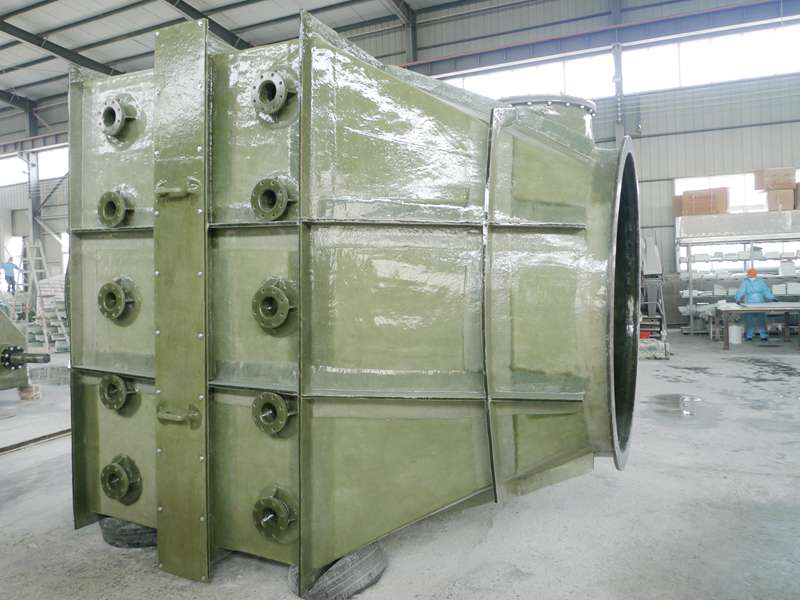
In the power market and FGD (Flue Gas Desulfurization) applications, where drilling and ventilation are often required in highly corrosive environments, the integration of abrasion-resistant ducts and supports is mandatory. Using materials that resist both chemical attack and mechanical wear ensures that the support infrastructure does not fail while the drilling equipment is operating at peak capacity.
Professional manufacturers now offer a holistic approach, combining design engineering, CAD calculations, and FEA to ensure that every component—from the smallest fitting to the largest support tower—is optimized for the specific geological and chemical conditions of the project site. This eliminates weak points in the system and maximizes the uptime of the drilling operation.
Future Trends in Hard Rock Excavation and Procurement
The industry is moving toward "smart drilling," where sensors embedded in the drilling assembly provide real-time feedback on bit wear and rock hardness. This allows operators to adjust the weight-on-bit (WOB) and rotation speed dynamically, significantly extending the life of the tool. For wholesale buyers, this means shifting toward suppliers who can integrate sensor-compatible designs into their tool manufacture.
Additionally, there is a growing trend toward the use of hybrid materials. By combining the extreme hardness of diamonds with the toughness of advanced composites, the next generation of tools will be able to handle the transition between different rock layers without needing to change the bit. This will drastically reduce the time lost during tool changes in deep-bore projects.
From a procurement perspective, the emphasis is shifting toward sustainable and long-life components. Buyers are increasingly favoring suppliers who can prove the durability of their products through rigorous laboratory testing and adherence to international standards like ASME and BS EN. The goal is to move away from disposable tooling toward a model of high-efficiency, long-service-life equipment.
Common Technical Inquiries Regarding Hard Rock Drilling Procurement
What is the most critical factor when choosing a drill bit for hard rock?
The most critical factor is the balance between hardness and toughness. While the bit must be hard enough to penetrate the rock, it must also be tough enough to resist fracturing under the high-impact loads typical of hard rock drilling.
How does the choice of material affect the penetration rate (ROP)?
Materials with higher hardness, such as PDC or premium tungsten carbide, generally offer a higher ROP in hard rock because they maintain a sharp cutting edge for longer, reducing the amount of energy wasted as heat.
Can FRP components be used in drilling rig structures?
Yes, FRP is extensively used for structural supports, casings, and ventilation ducts in drilling sites, especially where corrosion resistance and a high strength-to-weight ratio are required to protect the equipment.
What certifications should I look for in a wholesale tooling supplier?
Look for ISO9001 for quality management, and ensure the products are manufactured according to recognized international codes such as ASTM, ASME, or BS EN to ensure performance consistency.
What is the difference between a conical and a hemispherical insert?
Conical inserts are generally better for penetrating very hard, brittle rock by creating a concentrated point of pressure, while hemispherical inserts provide better stability and wear resistance in moderately hard, abrasive rock.
How can I reduce the wear rate of my drilling bits in abrasive strata?
Optimizing the flushing system to remove cuttings immediately and adjusting the rotation speed to prevent overheating are the two most effective ways to reduce abrasive wear.
Technical Resources and Industry Standards
- ASTM International - Materials Standards
- ASME - Mechanical Engineering Codes
- ISO - Quality Management Systems
- ScienceDirect - Rock Mechanics Research
Selecting the right tooling for hard rock environments requires a deep understanding of both materials science and geological application. By partnering with manufacturers who combine advanced engineering with rigorous quality control, industrial buyers can ensure maximum efficiency and durability in their excavation projects.
Related Industrial FRP Solutions