



Durable FRP Tanks for Industrial Storage | Reliable & Customizable
Understanding the FRP Tank: Durable Solutions for Industrial Storage
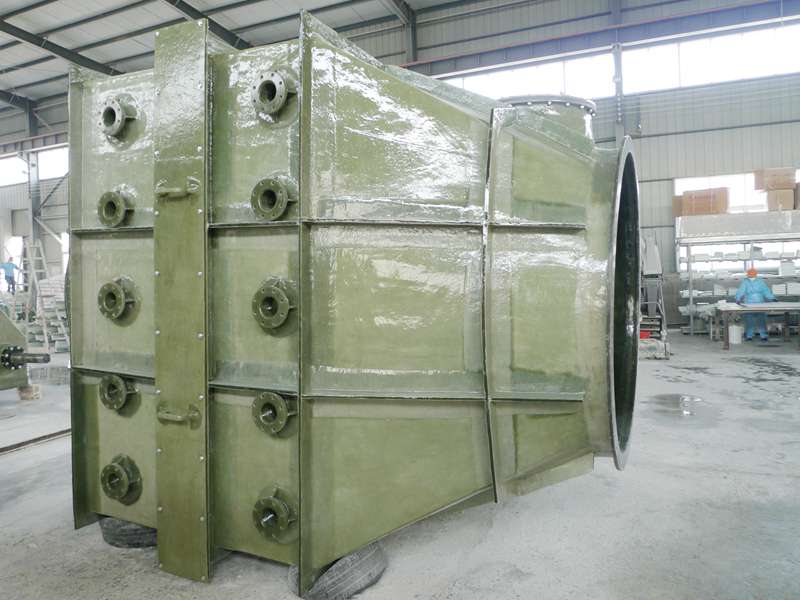
Having spent a fair chunk of my career in the industrial equipment realm, I’ve seen firsthand how critical a component seemingly as straightforward as a FRP tank can be. Oddly enough, these Fiber Reinforced Plastic tanks often don’t get much spotlight—even though they quietly carry the weight of numerous industrial processes, from chemical storage to water treatment.
Frankly, I suppose you could say the strength of an FRP tank lies not just in its material composition but in how versatile and customizable it turns out to be. These tanks blend the toughness of reinforced plastics with corrosion resistance that steel tanks often struggle to match, especially in harsh chemical environments. Over the years, many engineers I worked with have valued the relatively light weight and ease of installation, which can dramatically reduce downtime during plant upgrades or expansions.
To get a clearer picture, here’s a quick rundown of typical product specifications you’ll find on leading FRP tanks:
| Specification | Details |
|---|---|
| Material | Fiber Reinforced Plastic (e.g., Glass Fiber + Resin) |
| Capacity Range | 500 to 100,000+ liters |
| Design Pressure | Up to 1.5 bar (varies by model) |
| Operating Temperature | -20°C to 80°C |
| Corrosion Resistance | Excellent against acids, alkalis, salts |
| Common Applications | Chemical storage, wastewater treatment, food processing |
Now, when it comes to choosing a vendor for FRP tanks, I’ve always believed it matters to look beyond specs and price tags. The nuances of after-sale service, customization options, delivery times—these are often what make or break a project. Here’s a handy comparison of key players I’ve come across:
| Vendor | Customization | Lead Time | Support & Service | Typical Price Range |
|---|---|---|---|---|
| JRain FRP | High – tailored shapes, sizes, and reinforcement layers | 3–6 weeks | Dedicated in-house engineers, post-install support | $$$ (mid to high) |
| Vendor B | Medium – standard sizes only | 4–8 weeks | Limited phone support | $$ (budget) |
| Vendor C | Low – off-the-shelf products | 2–4 weeks | Minimal support | $ (low cost) |
Reflecting on a project a few years back, one chemical plant we worked with switched out corroded steel tanks for FRP tanks. The shift cut their maintenance costs dramatically. And installation? It felt like night and day—those tanks were much lighter but still robust. Custom fit to their site's specs, they handled acidic media reliably, which was the real game changer.
Despite some lingering myths about plastics and durability, the truth is these FRP tanks have proven their mettle repeatedly. They blend engineering know-how, smart materials, and adaptability—a combo that frankly feels like the future for storing aggressive or sensitive liquids.
To sum up: when you need a tank that truly balances longevity, corrosion resistance, and flexibility, the FRP tank is a winner in industrial settings.
References:
- Industry standards for FRP tanks - American Composite Manufacturers Association
- Case study: Chemical plant maintenance improvements - Journal of Industrial Equipment
- Material properties of FRP composites - Composite Materials Handbook

Latest news
-
Industrial High Pressure Fiberglass Pipe Guide and Technical SpecsNewsApr.16,2026
-
Industrial Storage Guide for Fiberglass Chemical TanksNewsApr.09,2026
-
Explore Durable and Customizable Custom Fiberglass Tanks for Your IndustryNewsApr.07,2026
-
Comprehensive Guide to Fiberglass Roof Tanks for Liquid Storage SolutionsNewsApr.04,2026
-
Comprehensive Guide to Durable and Corrosion Resistant Glass Fiber TanksNewsMar.31,2026
-
Comprehensive Guide to Tank Fiberglass Solutions and Their Diverse ApplicationsNewsMar.28,2026