The evolution of marine transportation has been fundamentally reshaped by the introduction of the fiberglass boat, a marvel of composite engineering that balances strength, weight, and versatility. Unlike traditional timber or heavy steel vessels, these boats utilize glass-reinforced plastic (GRP) to create a seamless, non-corrosive hull that can withstand the harshest aquatic environments. For boat owners and commercial operators alike, understanding the material science behind these vessels is the first step in maximizing their operational lifespan.
Globally, the shift toward composite materials in naval architecture is not merely a trend but a necessity driven by the demand for fuel efficiency and lower maintenance costs. The ability to mold complex hydrodynamic shapes allows a fiberglass boat to slice through water with significantly less drag than its predecessors. This efficiency reduces the carbon footprint of marine travel while increasing the payload capacity for fishing, transport, and leisure.
However, the industry faces a dual challenge: balancing the high performance of these materials with the growing global mandate for environmental sustainability. As we explore the intricacies of GRP construction, from the resin chemistry to the layering process, it becomes clear that the modern fiberglass boat represents a bridge between traditional maritime craftsmanship and future-forward aerospace technology.
Understanding the Composition of Fiberglass Boats
At its core, a fiberglass boat is a composite structure where fine fibers of glass are embedded within a polymer resin matrix. This synergy creates a material that is far stronger than the sum of its parts; the glass fibers provide the tensile strength, while the resin provides the shape and protects the fibers from environmental degradation.
The manufacturing process typically involves laying these fibers into a mold and saturating them with liquid polyester, vinyl ester, or epoxy resins. This ensures that the resulting hull is a single, monolithic piece, eliminating the seams and joints that traditionally acted as failure points in wooden or riveted metal boats.
Global Industry Impact and Market Relevance
The global maritime sector has seen an overwhelming shift toward GRP, with ISO standards now heavily reflecting the quality controls required for composite hulls. In many coastal economies, the adoption of the fiberglass boat has revolutionized small-scale fishing and tourism by lowering the entry barrier for vessel ownership due to reduced initial maintenance requirements.
Statistical trends indicate that composite vessels now dominate the recreational boating market, representing over 70% of new hull constructions worldwide. This surge is attributed to the scalability of production; whereas a wooden boat requires painstaking manual labor, a fiberglass mold allows for the rapid replication of high-performance designs.
Despite this success, the industry is currently grappling with the challenge of "end-of-life" disposal. Because the resin is a thermoset plastic, it cannot be simply melted down. This has sparked a global movement toward bio-resins and recyclable glass fibers to ensure the nautical industry remains sustainable for future generations.
Core Engineering Components for Durability
To ensure a fiberglass boat survives decades of saltwater exposure, engineers focus on "osmosis prevention." This involves applying a high-quality gelcoat—a pigmented resin layer—that acts as a waterproof barrier, preventing water molecules from penetrating the structural laminate.
The internal skeletal structure of a fiberglass boat often utilizes a combination of core materials like PVC foam or balsa wood, sandwiched between layers of fiberglass. This "sandwich construction" maximizes rigidity while minimizing weight, which is critical for buoyancy and fuel economy.
Furthermore, the choice of resin is pivotal. While polyester is cost-effective, vinyl ester is frequently used in the outer layers of a fiberglass boat because of its superior resistance to blistering and chemical erosion, ensuring the vessel remains structurally sound under extreme pressure.
Performance Comparison of Manufacturing Methods
Different construction techniques result in varying performance metrics for a fiberglass boat. Hand lay-up is the most common for custom builds, offering flexibility, whereas vacuum infusion ensures a higher fiber-to-resin ratio, leading to a lighter and stronger hull.
Modern high-end vessels are increasingly utilizing Pultrusion and Filament Winding for specific structural components. These methods provide precise control over the orientation of the glass fibers, allowing the fiberglass boat to handle higher torsional stresses during rough sea navigation.
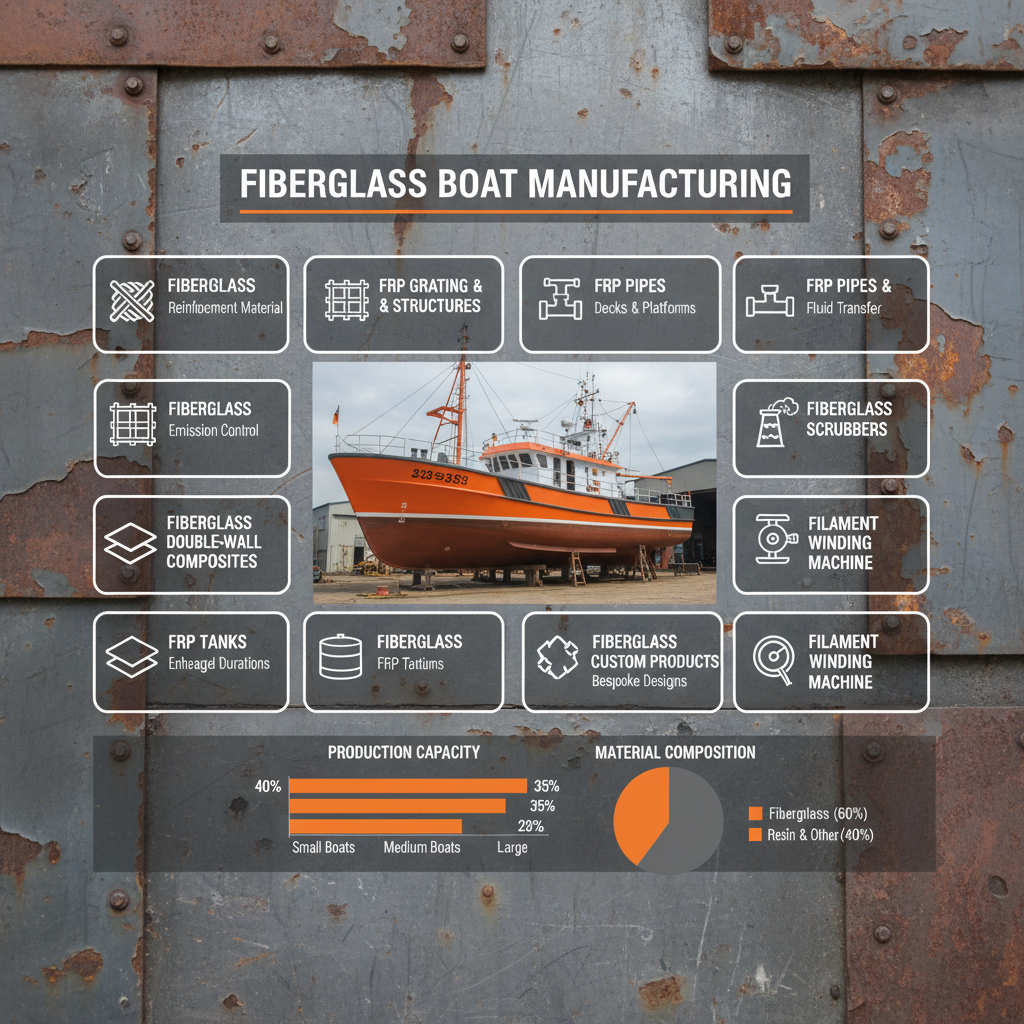
Manufacturing Efficiency for Fiberglass Boat Types
Diverse Real-World Applications
The versatility of the fiberglass boat extends far beyond recreational sailing. In professional maritime sectors, these vessels are used as high-speed interceptors for coast guards and search-and-rescue teams, where the ability to absorb impact without permanent deformation is a life-saving feature.
In remote industrial zones, such as offshore wind farm maintenance, a specialized fiberglass boat is often the only viable transport. Their resistance to salt-spray corrosion ensures that technical crews can reach turbines without the constant worry of hull degradation associated with steel vessels.
Long-term Value and Maintenance Benefits
One of the most compelling arguments for choosing a fiberglass boat is the dramatic reduction in lifelong maintenance. Unlike wood, which is prone to rot and shipworms, or steel, which requires constant painting to fight rust, GRP is inherently inert.
From an emotional and logical standpoint, this provides boat owners with "peace of mind." The reliability of a composite hull means less time in the dry dock and more time on the water. This reliability translates directly into higher resale values, as buyers trust the structural integrity of a well-maintained fiberglass hull.
Furthermore, the ability to repair a fiberglass boat using simple resin patches makes it an accessible choice for those without access to heavy industrial welding equipment, fostering a culture of DIY maintenance and longevity.
Future Trends in Composite Marine Design
The future of the fiberglass boat is leaning heavily toward "Green Composites." Researchers are integrating natural fibers like flax and hemp with bio-based resins to create hulls that are not only high-performing but also biodegradable or easily recyclable.
Digital transformation is also playing a role through 3D printing of molds and AI-driven stress analysis. By simulating ocean currents and impact points, engineers can now optimize the thickness of a fiberglass boat hull, placing material only where it is structurally necessary to reduce weight and waste.
As automation in the manufacturing process increases, we can expect a democratization of customized vessel design, where a fiberglass boat can be tailored to a user's specific hydrodynamic needs without the prohibitive cost of traditional custom shipbuilding.
Analysis of Fiberglass Boat Material Performance by Environment
| Environment Type |
Corrosion Resistance |
Impact Strength |
Maintenance Score |
| Tropical Saltwater |
Excellent |
High |
9/10 |
| Arctic Freezing Waters |
High |
Moderate |
7/10 |
| Freshwater Lakes |
Maximum |
High |
10/10 |
| Industrial Estuaries |
Moderate (with Vinyl Ester) |
High |
8/10 |
| High-Wave Open Ocean |
Excellent |
Very High |
8/10 |
| Shallow Rocky Shores |
High |
Moderate |
6/10 |
FAQS
A fiberglass boat offers superior moldability, allowing for more complex, hydrodynamic hull shapes that improve speed and stability. While aluminum is very durable, it can be noisier and more prone to galvanic corrosion in saltwater. Fiberglass is naturally non-corrosive and generally provides a smoother, more aesthetic finish.
Osmosis, or blistering, can be prevented by ensuring the hull has a high-quality gelcoat and epoxy barrier coat. Regular polishing and the application of specialized marine sealants help keep moisture from penetrating the laminate. If blisters appear, they should be dried out and repaired immediately to prevent structural damage.
Traditionally, GRP is difficult to recycle. However, the industry is shifting toward the use of recyclable resins and natural fiber reinforcements. Additionally, the fuel efficiency gained from the lightweight nature of a fiberglass boat helps reduce operational carbon emissions compared to heavier steel vessels.
Yes, one of the biggest advantages of fiberglass is its repairability. Damaged areas can be ground down and patched with new glass cloth and resin. Once cured and sanded, the repair is often structurally as strong as the original hull and can be blended perfectly with the gelcoat.
With proper maintenance, a fiberglass boat can easily last 30 to 50 years. The primary factors affecting longevity are UV exposure (which can fade the gelcoat) and the quality of the original resin used. Regular waxing and protecting the boat from direct sunlight when docked can significantly extend its life.
Compared to wood or steel, the maintenance cost of a fiberglass boat is very low. The primary requirements are seasonal cleaning, gelcoat waxing, and occasional anti-fouling paint for the bottom. There is no need for the intensive sanding and painting required by other materials.
Conclusion
The fiberglass boat represents a pinnacle of material science, successfully merging the need for structural rigidity with the requirement for lightweight efficiency. By analyzing its composition, from the critical role of gelcoats to the advancement of vacuum infusion, we see a vessel that is built for longevity, safety, and performance across diverse marine environments.
Looking forward, the integration of sustainable bio-composites and AI-optimized designs will ensure that these vessels remain relevant in an eco-conscious world. For those seeking a balance of reliability and low maintenance, investing in high-quality composite engineering is the most logical path forward. Visit our website: www.jrain-frp.com