
When industrial piping systems encounter extreme chemical aggression or complex spatial constraints, standard off-the-shelf components often fail to provide the necessary reliability. This is where fiberglass customized fittings become essential, offering a tailored approach to fluid handling that balances mechanical strength with precise chemical resistance.
Unlike generic PVC or steel fittings, customized FRP (Fiberglass Reinforced Plastic) solutions allow engineers to specify the exact liner material and structural reinforcement required for a specific medium. This precision reduces the risk of premature joint failure and eliminates the need for improvised field modifications that can compromise system integrity.
By integrating advanced winding techniques and dual-laminate options, these bespoke components ensure a seamless transition between piping runs in the most challenging environments, from desalination plants to chemical processing units.

The Engineering Logic Behind Custom FRP Fittings

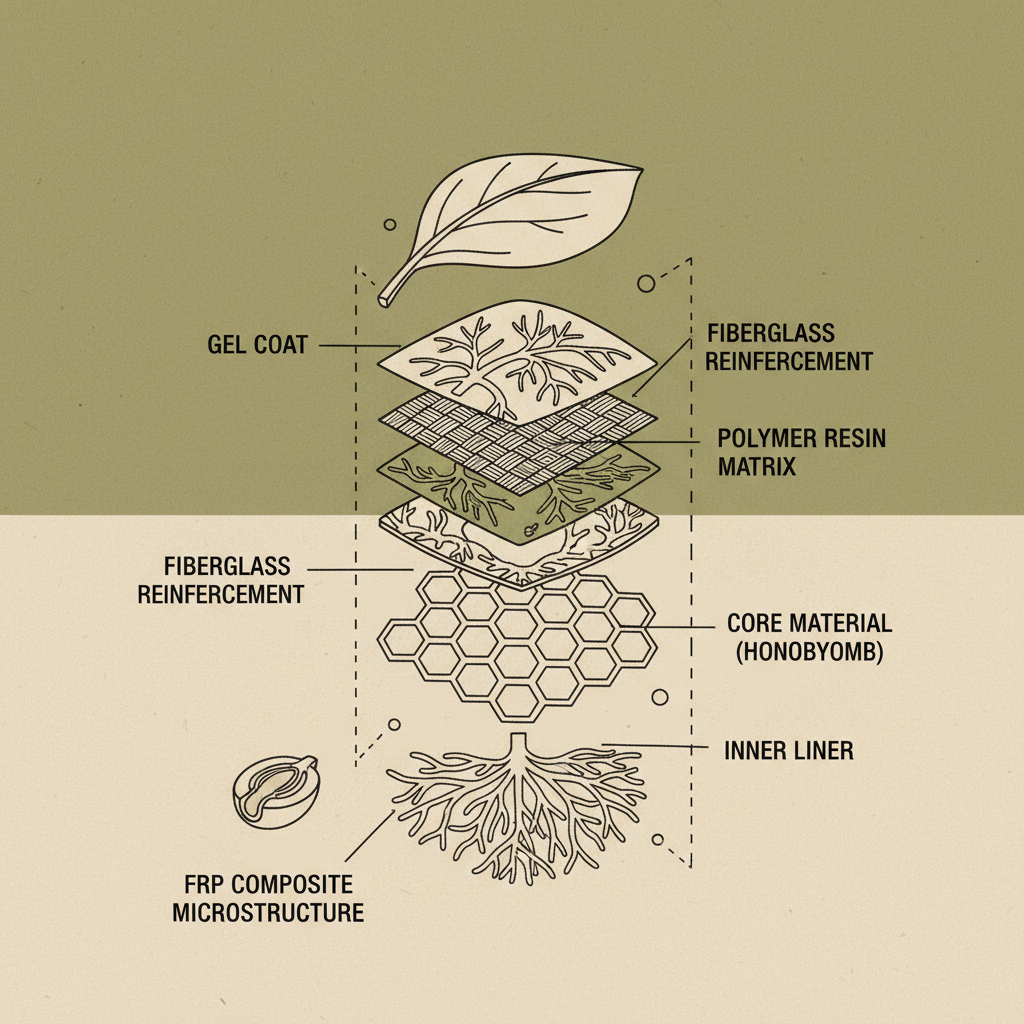
Standardized fittings are designed for average conditions, but industrial reality is rarely average. Customization in fiberglass fittings isn't just about size; it's about the synergy between the liner, the structural layer, and the top coat. For instance, a fitting handling highly corrosive acids may require a PVDF liner for chemical inertness, while the structural fiberglass layer is engineered to handle the specific hoop and longitudinal stresses of the operating pressure.
The process involves translating complex CAD requirements into physical molds or winding patterns. By utilizing mandrels and precision winding machines, manufacturers can create geometries—such as non-standard elbows or complex tees—that would be impossible or prohibitively expensive to machine from solid blocks of plastic or metal.
This engineering approach ensures that the transition points in a piping system, which are typically the weakest links, possess the same—or greater—corrosion resistance and mechanical strength as the pipes themselves, thereby extending the total lifecycle of the installation.
Core Technical Advantages of Tailored Composite Solutions
The primary value of customization lies in the ability to optimize the strength-to-weight ratio. While steel is strong, its weight necessitates heavy support structures. Fiberglass customized fittings provide a solution that is often less than 20% of the weight of steel, yet offers equivalent or superior structural integrity on an equal weight basis.
Beyond weight, the low coefficient of friction—typically 25% better than steel—reduces pressure drops across fittings, leading to lower energy costs for pumping systems. Furthermore, the low thermal conductivity of FRP minimizes heat loss or gain, which is critical for temperature-sensitive chemical processes.
Customization also extends to the jointing method. Whether the application requires butt joints, spigot and bell joints, or flange joints, the fitting is manufactured to integrate perfectly with the existing piping architecture, eliminating the need for unreliable adhesives or problematic field-welding.
Critical Application Scenarios for Bespoke Piping Components
In seawater desalination and brine handling, the combination of high salt concentrations and pressure creates an incredibly aggressive environment. Custom FRP fittings allow for the use of dual-laminate structures, where a thermoplastic liner provides the chemical barrier and the fiberglass provides the structural skeleton, preventing the "wicking" effect common in single-layer composites.
Chemical scrubbing and flue gas desulfurization (FGD) systems represent another critical use case. Here, fittings must withstand both chemical attack and fluctuating temperatures. Custom-engineered dampers and duct system fittings ensure that gas flows are managed without creating turbulent zones where corrosive condensate can accumulate and cause localized pitting.
Additionally, in the marine and boat body sectors, space is at a premium. Customized fittings allow for tighter bend radii and integrated mounting points, reducing the overall footprint of the piping system while maintaining the high impact resistance required for vessel operations.
Analyzing Performance Metrics Against Traditional Materials
When comparing custom FRP fittings to stainless steel or HDPE, the metrics shift from initial procurement cost to Total Cost of Ownership (TCO). While the initial engineering of a custom fitting may be higher than a standard part, the reduction in maintenance frequency and the elimination of corrosion-related downtime provide a significant economic advantage.
The following data illustrates the relative performance across key industrial indicators, highlighting the efficiency gains when moving from conventional metallic benchmarks to customized composite solutions.
fiberglass customized fittings Performance Metrics
The data demonstrates that customized FRP solutions excel particularly in corrosion resistance and weight reduction. While the "Industry Benchmark" represents average metallic or generic plastic performance, the customized FRP approach optimizes these values based on the specific application's demands.
Procurement Framework for Custom Composite Fittings
Procuring customized fittings requires a shift from "part-number ordering" to "specification-based procurement." The buyer must provide a complete chemical profile of the medium, the maximum and minimum operating temperatures, and the hydraulic pressure requirements. Without these details, the risk of selecting an incorrect resin or liner increases significantly.
Evaluation of the supplier is equally critical. A capable manufacturer should possess not only the winding machinery but also an in-house lab for hydrostatic testing and quality certification. Adherence to international standards such as ASTM, DIN, or ISO ensures that the customized part will integrate with global piping standards.
Finally, procurement teams should consider the lead time associated with custom mold creation. While standard fittings are available for immediate shipment, bespoke components require a design-and-verify cycle. Planning this phase early in the project timeline prevents costly installation delays.
Future Directions in Fiber-Reinforced Joining Technology
The industry is likely to see a move toward more intelligent manufacturing, where additive manufacturing (3D printing) is used to create complex mandrels for the winding process. This could further reduce the lead time for highly complex geometries, allowing for "rapid prototyping" of customized fittings before full-scale production.
Another trend is the integration of sensor technology within the structural layer of the fitting. By embedding fiber-optic sensors, operators may be able to monitor real-time stress and strain or detect liner breaches before they lead to catastrophic system failure, moving from reactive to predictive maintenance.
Sustainability is also driving innovation, with a growing focus on bio-based resins and recyclable glass fibers. While performance remains the priority, the shift toward lower-carbon composite materials is expected to influence procurement specifications in the coming decade, especially in EU and North American markets.
Selection Guide for Custom vs Standardized Fittings
Deciding between a standard fitting and a customized solution depends on the intersection of chemical risk and spatial constraints. In low-risk environments with standard pipe diameters, generic fittings are sufficient. However, once the process involves extreme pH levels or requires non-standard angles to fit into existing plant layouts, customization becomes a technical necessity.
The following table provides a comparative framework to help procurement engineers determine the most appropriate approach based on project constraints.
| Project Driver | Standard Fittings | Customized FRP | Recommendation |
|---|---|---|---|
| Chemical Aggression | Limited to generic resin | Tailored liner (PVC/PVDF/PE) | Custom for high-risk media |
| Spatial Constraints | Fixed angles (45/90°) | Bespoke geometry/radii | Custom for tight footprints |
| Initial Cost | Low per unit | Higher engineering cost | Standard for basic utility |
| Maintenance Cycle | Frequent check-ups | Extended service life | Custom for critical assets |
| Lead Time | Immediate availability | Design + Fabrication time | Standard for rapid repair |
| System Weight | Moderate | Optimized weight-to-strength | Custom for marine/aerial |
Ultimately, the choice reflects a trade-off between immediate convenience and long-term operational stability. For critical infrastructure, the investment in customized engineering typically pays for itself through the avoidance of a single unplanned shutdown.
Frequently Asked Questions
Conclusion
The transition toward customized fiberglass fittings represents a move toward precision engineering in industrial fluid handling. By aligning the material science of the liner with the mechanical requirements of the structure, enterprises can effectively eliminate the chronic failure points associated with corrosion and stress in complex piping networks.
For organizations evaluating the technical and economic feasibility of upgrading their current piping architecture, reviewing the specific capabilities and product ranges available through www.jrain-frp.com can provide the necessary insight into implementing a durable, custom-engineered composite solution.