Look, I’ve been running around construction sites all year, getting my hands dirty with materials, talking to engineers… honestly, it’s exhausting. But you start to see what really matters, you know? Lately, everyone’s obsessed with prefabrication, modular stuff. It's the buzzword. Companies are racing to offer fully assembled units, faster build times, lower labor costs… the usual pitch. But it's not always as smooth as they make it sound.
There’s a lot of hype around these new materials too. Lightweight concrete, composite panels, self-healing polymers… sounds great on paper. But have you noticed how quickly things degrade in actual field conditions? It’s a completely different ballgame than the lab.
And don’t even get me started on tolerances. Everyone thinks they can design something to within a millimeter, then ship it to a site covered in mud, and expect it to fit perfectly. It’s a mess.
The Current Landscape of FRP Scrubbers
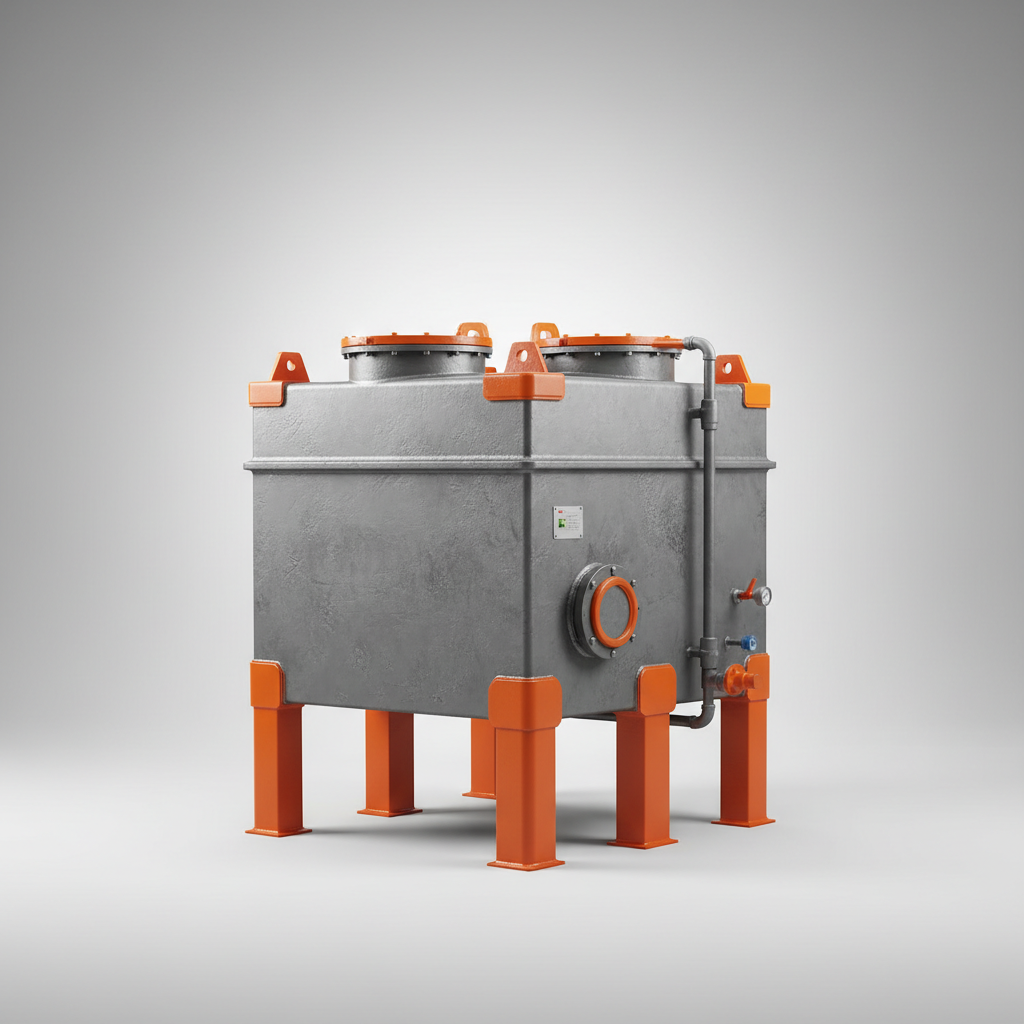
FRP scrubbers – fiberglass reinforced polymer. They're popping up everywhere now, mostly replacing older steel ones. It’s not hard to see why, honestly. The corrosion resistance is a lifesaver. I encountered this firsthand at a chemical plant in Louisiana last year. Everything was rusted through, the steel scrubber was practically falling apart. They switched to FRP, and it’s been running solid ever since.
It's a big shift. For years, everyone just assumed steel was the way to go. Heavy-duty, reliable. But the maintenance costs... the downtime... it adds up. With FRP, you're looking at a significantly longer lifespan and far less upkeep.
Common Design Pitfalls in FRP Scrubber Construction
Now, here's where things get tricky. A lot of companies are jumping on the bandwagon without fully understanding the nuances of working with FRP. I've seen some… questionable designs. Like, they'll try to mimic a steel scrubber design exactly in FRP. That’s a mistake. You have to design for the material, not just swap it in.
One big problem is wall thickness. Too thin, and you'll get deformation under pressure. Too thick, and you’re just adding unnecessary weight and cost. Getting that sweet spot requires serious engineering, and frankly, a lot of people cut corners. Strangely, I see people consistently underestimate the stress concentration around inlets and outlets.
Another thing: resin choice. There are so many different types of resin – polyester, vinyl ester, epoxy – each with its own strengths and weaknesses. Picking the wrong one for the application is a recipe for disaster.
Material Selection: Beyond the Datasheet
Let's talk materials. It's not just about the resin. The type of fiberglass matters too. E-glass is the standard, pretty affordable, but not the strongest. S-glass is tougher, more expensive. And then you have carbon fiber, which is incredibly strong and lightweight, but… well, it costs a fortune.
I remember being at a fiberglass factory in China a few years ago, and the smell was something else. It’s not a pleasant smell, let me tell you. You get a feel for the quality just by how it smells, how it feels to work with. You can tell if it’s properly saturated with resin, if the weave is tight and consistent.
And it's not just the raw materials, it's how they're used. Proper layering, orientation of the fibers, void content… all critical. You can have the best materials in the world, but if they're not applied correctly, the whole thing is compromised.
Real-World Testing and Performance
Lab testing is fine, but it doesn’t tell you the whole story. The real test is what happens when you put these scrubbers into service. I've seen scrubbers fail after just a few months because the design didn’t account for the specific corrosive chemicals they were exposed to.
We’ve started doing more field testing, installing sensors to monitor pressure, temperature, and corrosion rates in real-time. It’s a pain to set up, honestly, but it gives us invaluable data. We also do visual inspections regularly, looking for any signs of degradation, cracking, or delamination. Anyway, I think getting that feedback loop is crucial.
FRP Scrubber Performance Metrics
How FRP Scrubbers are Actually Used
You know, it’s not always what the engineers expect. I've seen plants try to run FRP scrubbers at pressures they weren't designed for, or expose them to chemicals outside their operating range. They'll say, "Oh, it should be able to handle it." But it doesn’t work like that.
A lot of times, operators aren't properly trained on how to inspect and maintain FRP equipment. They’re used to steel, so they look for rust. With FRP, you're looking for delamination, cracking, changes in color. It's a different skillset.
Advantages and Disadvantages of FRP Scrubbers
Okay, let’s be real. The biggest advantage is corrosion resistance. Hands down. It’s a game-changer, especially in harsh environments. They're also lighter than steel, which makes installation easier. But that lighter weight also means they can be more susceptible to vibration and damage if not properly supported.
And the cost? It can be higher upfront than steel, but the long-term savings on maintenance and replacement usually outweigh that initial investment. The downside, and this is a big one, is repairability. If a steel scrubber gets damaged, you can usually weld it up. With FRP, it’s much more complicated. It often means replacing the entire section.
Last month, that small boss in Shenzhen who makes smart home devices insisted on changing the interface to on a scrubber, and the result was a huge headache. It wasn’t compatible with their existing system, and they ended up having to redesign everything. It’s a lesson: don't fix what isn’t broken.
Customization and Specific Applications
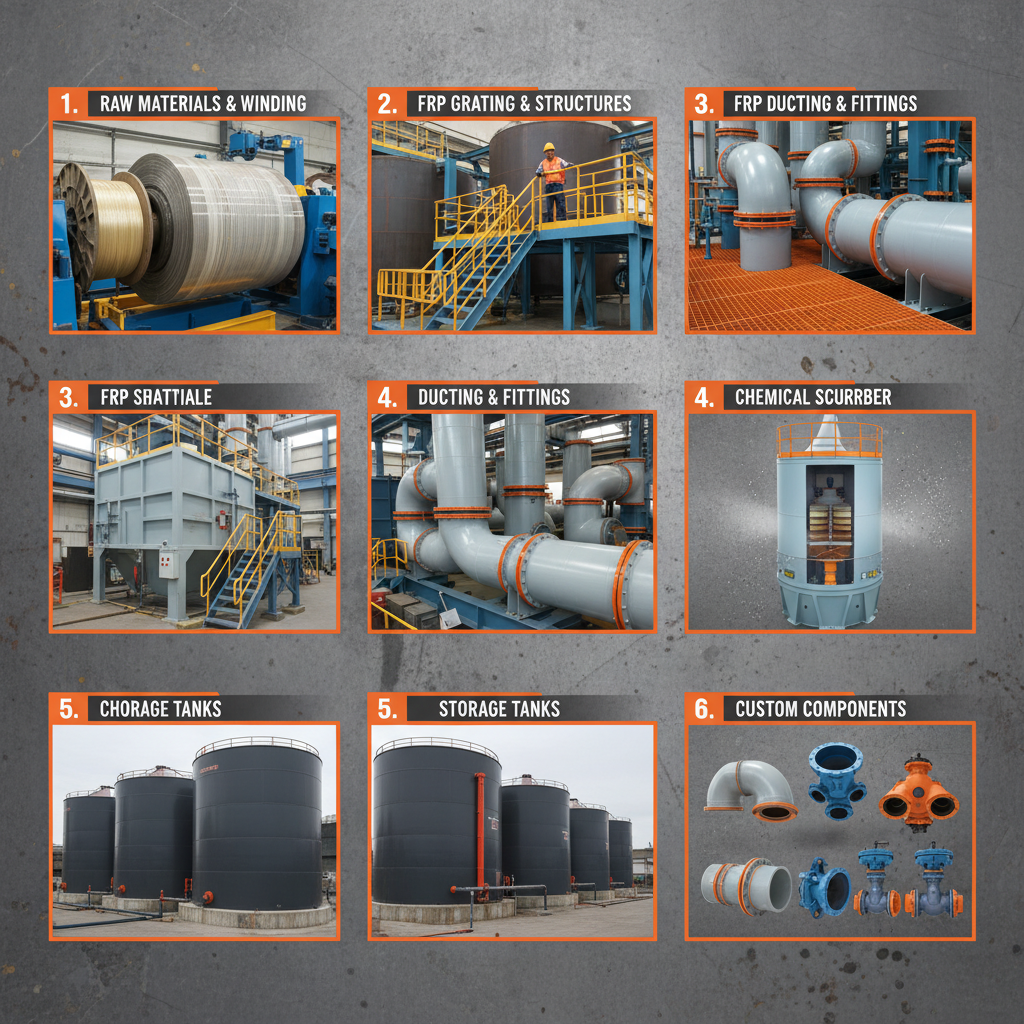
The beauty of FRP is its versatility. You can mold it into just about any shape, tailor the resin and fiber content to specific applications. We did a project for a wastewater treatment plant that needed a scrubber with a very complex internal geometry. Steel would have been a nightmare to fabricate. FRP was perfect.
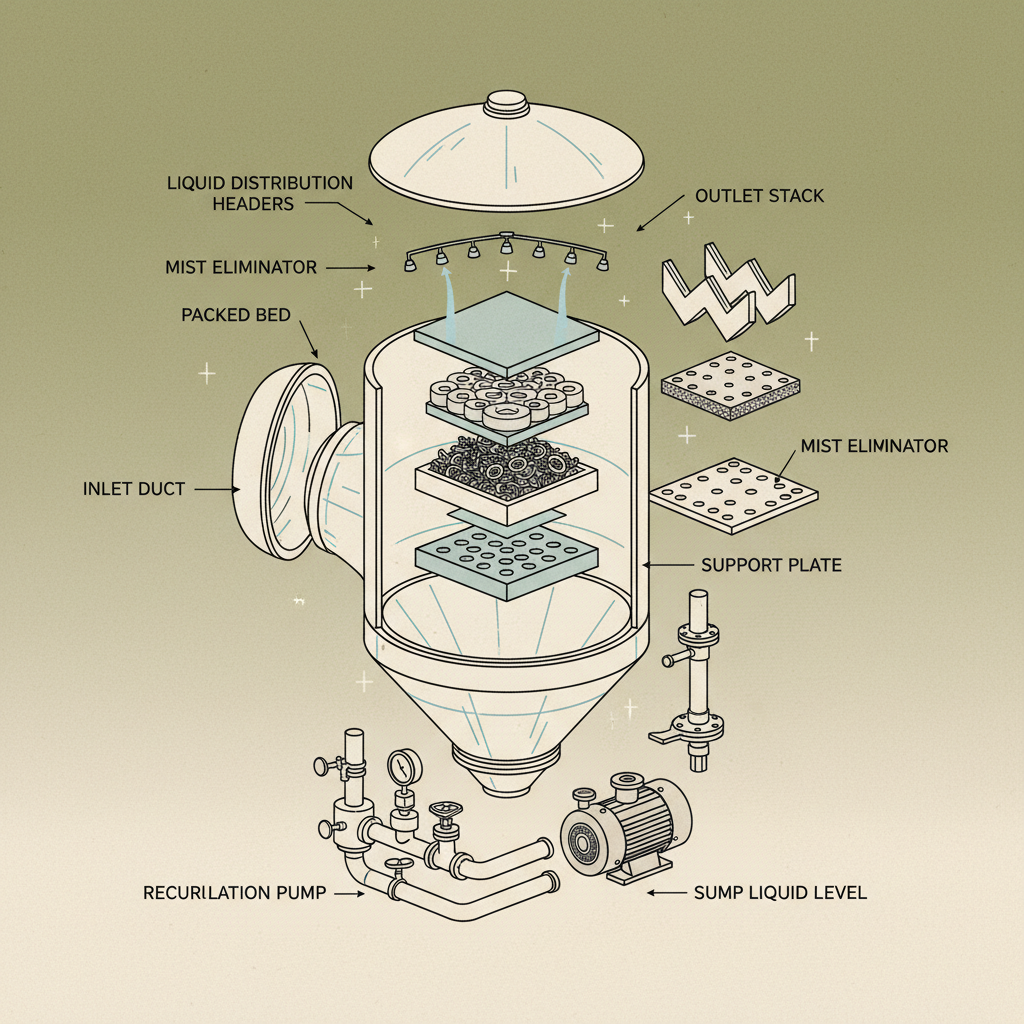
We’ve also done a lot of work with scrubbers for removing specific gases, like hydrogen sulfide or ammonia. You can customize the packing material to maximize absorption efficiency. It's all about understanding the process and tailoring the scrubber to meet the needs.
You want a scrubber that’s resistant to both hydrochloric acid and chlorine gas? Sure, we can do that. It’ll cost a bit more, but it’ll be built to last.
Summary of FRP Scrubber Design Considerations
| Design Parameter |
Critical Considerations |
Potential Failure Points |
Mitigation Strategies |
| Wall Thickness |
Pressure rating, chemical compatibility, structural support. |
Deformation, cracking, catastrophic failure. |
Finite element analysis, material testing, conservative design factors. |
| Resin Selection |
Chemical resistance, temperature range, mechanical properties. |
Corrosion, softening, degradation. |
Careful chemical compatibility studies, review of resin data sheets. |
| Fiber Orientation |
Optimizing strength in specific directions, managing stress concentration. |
Delamination, localized failure. |
Multi-axial winding, proper fiber alignment during layup. |
| Inlet/Outlet Design |
Minimizing pressure drop, ensuring even flow distribution, stress concentration. |
Erosion, cracking, vibration. |
Reinforced connections, smooth transitions, vibration damping. |
| Packing Material |
Gas absorption efficiency, pressure drop, chemical resistance. |
Channeling, fouling, degradation. |
Proper material selection, regular inspection, cleaning. |
| Structural Support |
Preventing deformation under load, accommodating thermal expansion/contraction. |
Cracking, buckling, fatigue failure. |
Robust support structures, expansion joints, proper anchoring. |
FAQS
Honestly, it depends. But a well-designed and properly maintained FRP scrubber in a harsh environment – think constant exposure to strong acids and high temperatures – should last at least 15-20 years. We've seen some push past 25, but those are usually exceptionally well-built and carefully monitored. It's not a set-and-forget type of thing. Regular inspections are key to catching problems early.
They can, but it’s resin-dependent. Polyester resins are generally good up to around 80°C (176°F). Vinyl ester resins can handle higher temps, up to around 120°C (248°F). Epoxy resins are the best for high-temperature applications, going up to 150°C (302°F) or even higher with specialized formulations. You have to match the resin to the temperature requirements of the process. It’s not just about the temperature, though; chemical exposure at high temps can accelerate degradation.
Repairing FRP is tricky. Small cracks can sometimes be filled with epoxy resin and fiberglass cloth. But larger damage usually requires replacing the affected section. It’s not like welding steel. You need skilled technicians who understand FRP repair techniques. Often, it’s more cost-effective to replace the entire scrubber if the damage is extensive. It’s a bit frustrating, but that’s just the nature of the material.
Absolutely. Saltwater is actually a good environment for FRP. It's highly resistant to corrosion from saltwater. However, you need to specify the right resin and fiberglass – vinyl ester is often a good choice. UV exposure is more of a concern offshore, so you need to use a resin with good UV resistance or apply a UV-protective coating. The biggest challenge is usually logistics - getting the scrubber to the offshore platform and installing it.
Lead times vary depending on the complexity of the design and our current workload. A relatively simple scrubber might take 6-8 weeks. A complex, custom-engineered scrubber could take 12-16 weeks or even longer. It’s best to get in touch early in the project planning phase to get an accurate estimate. Don’t wait until you’re already in a pinch, because that’s when things get expensive.
One big one is improper support. FRP is strong, but it needs adequate support to prevent deformation or cracking. Another mistake is not allowing for thermal expansion and contraction. FRP expands and contracts at a different rate than steel, so you need to account for that in the design. Finally, be careful not to damage the scrubber during installation. It’s surprisingly easy to scratch or dent the surface, which can compromise its integrity.
Conclusion
So, that’s the state of FRP scrubbers right now. They’re not a silver bullet, but they’re a significant improvement over traditional materials in many applications. The key is to understand the material’s limitations, design carefully, and pay attention to detail. It's not always glamorous work, but it’s vital.
Ultimately, whether this thing works or not, the worker will know the moment he tightens the screw. That’s the truth of it. And if he has to call me in the middle of the night because something’s not right… well, that’s just part of the job.