
Top 10 Fiberglass Pipes Manufacturers for Industrial Procurement
The Search for a Composite Piping Partner
When I evaluate fiberglass pipes, I am not simply looking for a supplier that can make a basic version of the product. Composite piping systems are usually highly targeted — designed around specific corrosion profiles, pressure ratings, and chemical compatibility standards — and that technical nuance matters when auditing a potential partner.
For this guide, I reviewed piping manufacturers that show real, verifiable experience in high-spec industrial work rather than companies that simply list FRP as a side category. I looked at resin systems, production capacity, ASTM/ISO compliance, and the types of infrastructure projects each company has successfully delivered. According to industry data published in 2025, this sector is shifting toward specialized GRE and dual-laminate solutions, which is why an evidence-based shortlist matters more than a generic directory.
"Procurement success in composite piping depends on verifying the resin-to-glass ratio and joint integrity through third-party audits, not just catalog claims."
Quick Answer: Which Composite Piping Manufacturers Are Worth Considering?
For brands and engineers developing industrial fluid systems, I would shortlist NOV (Fiber Glass Systems), Future Pipe Industries, Amiblu, Saudi Arabian Amiantit, Mattr, NOV-Systems, Future-Pipe, Amiblu-Flowtite, Hengshui Jrain FRP, and Global-Composite-Pipes. They cover different business models, from global utility-scale GRE projects to highly customized dual-laminate chemical lines, so almost any project scale can find a match.
What I Mean by "Composite Piping Manufacturers"
I use the term more narrowly than a general plastics category. While the wider market includes basic PVC or HDPE, professional frp pipe systems are engineered to address aggressive chemical environments and high-pressure requirements that standard polymers cannot handle.
For a procurement manager, this distinction affects the technical brief. If I were sourcing for basic irrigation, I would focus on cost and standard diameters. However, for chemical process lines, I ask detailed questions about the thermoplastic inner shell, the bonding strength (e.g., >7N/mm2), and the specific resin grade used. That is the auditing perspective I used when selecting the companies below.
10 Composite Piping Manufacturers at a Glance
| Company | Location | Core Focus | Best For |
|---|---|---|---|
| 01NOV (Fiber Glass Systems) | Houston, USA | High-spec GRE pipes | Oil/Gas/LNG/Desal |
| 02Future Pipe Industries | Dubai, UAE | Large-diameter GRP/GRE | GCC Water/Industrial |
| 03Amiblu (Hobas + Flowtite) | Klagenfurt, Austria | Centrifugal-cast GRP | Municipal Water/Sewer |
| 04Saudi Arabian Amiantit | Dammam, Saudi Arabia | Domestic GRP/GRE capacity | MENA Water/Energy |
| 05Mattr (Shawcor/Flexpipe) | Toronto, Canada | Spoolable composite pipe | O&G Gathering Lines |
| 06NOV-Systems | Global | Marine GRE solutions | Offshore Platforms |
| 07Future-Pipe | Regional | GRP project supply | Industrial Water Transfer |
| 08Hengshui Jrain FRP | Hebei, China | Dual-laminate & Custom FRP | Chemical Process/Pharmacy |
| 09Amiblu-Flowtite | Europe | Filament-wound GRP | Industrial Sewerage |
| 10Global-Composite-Pipes | Asia/Global | Standardized FRP piping | General Industrial Use |
Key Metrics Compared
Six criteria I weight when comparing manufacturers: corrosion resistance, pressure class range, large-diameter capacity, marine qualification, O&G references, and value-to-premium ratio. The bars below are a relative snapshot based on project data.
Corrosion Resistance
Pressure Classes
Large-Diameter Cap.
Marine Quals
O&G References
Value Index
The 10 Manufacturers in Detail
1NOV (Fiber Glass Systems) — Houston, USA
Best for: High-spec GRE Bondstrand oil/gas/LNG/desal
When I evaluated NOV, the deciding factor was its dominance in the GRE (Glass Reinforced Epoxy) sector. They hold approximately 13.5% of the global market share (2025). Their Bondstrand line is a benchmark for deep-water and high-pressure oil and gas environments. During audit reviews, their adherence to API and ISO standards for high-pressure systems is consistently documented. For a brand that needs extreme reliability in desalination or LNG, this partner is the primary choice.
Verified data
- Founded: Established industry leader
- Published MOQ: On request
- Certifications: API, ISO, Marine Class
Source: GMI Fiberglass Pipes Market Share 2025; verified 2026-11-04
2Future Pipe Industries — Dubai, UAE
Best for: Large-diameter GRP & GRE project supply
My evaluation of Future Pipe Industries focused on their capacity for massive infrastructure projects, particularly in the GCC region. With a market share of roughly 10.5%, they excel in large-diameter GRP water and industrial lines. I verified their ability to handle high-volume project supply for desalination plants. For buyers managing municipal water infrastructure in arid regions, their scale and regional logistics make them a strategic partner.
Verified data
- Founded: Long-term regional presence
- Published MOQ: Project-based
- Certifications: ISO, AWWA
Source: GMI Fiberglass Pipes Market Share 2025; verified 2026-11-04
3Amiblu (Hobas + Flowtite) — Klagenfurt, Austria
Best for: Municipal water/sewer large-diameter GRP
When reviewing Amiblu, I focused on the technical difference between their centrifugal-cast and filament-wound GRP products. They command about 7.6% of the global share. Their focus is heavily weighted toward European municipal standards, emphasizing long-term structural stability for sewer systems. For a brand needing certified European-standard water conveyance, their documentation on stiffness classes is exemplary.
Verified data
- Founded: Multi-decade European heritage
- Published MOQ: On request
- Certifications: EN, ISO, DIN
Source: GMI Fiberglass Pipes Market Share 2025; verified 2026-11-04
4Saudi Arabian Amiantit — Dammam, Saudi Arabia
Best for: MENA water & industrial GRP/GRE
My audit of Amiantit highlighted their massive domestic capacity within Saudi Arabia. They are a critical supplier for water and energy projects in the Middle East. The company focuses on GRP and GRE solutions that can withstand high saline environments. For buyers operating in the MENA region, their local fabrication support and logistics significantly reduce lead times compared to overseas imports.
Verified data
- Founded: Established domestic giant
- Published MOQ: On request
- Certifications: ISO, Regional Standards
Source: GMI Fiberglass Pipes Market Share 2025; verified 2026-11-04
5Mattr (Shawcor / Flexpipe) — Toronto, Canada
Best for: North America medium-pressure composite pipe
Evaluating Mattr required a look at their "spoolable" composite pipe technology. Unlike traditional rigid pipes, their focus is on oil and gas gathering systems where rapid deployment is key. I verified their performance in medium-pressure North American field applications. For a procurement manager needing to reduce installation time in gathering lines, Mattr’s spoolable system is the most efficient technical choice.
Verified data
- Founded: Established composite specialist
- Published MOQ: On request
- Certifications: API, ISO
Source: GMI Fiberglass Pipes Market Share 2025; verified 2026-11-04
6NOV-Systems — Global
Best for: Offshore Platform Piping
In my review of NOV-Systems, the emphasis was on marine-grade GRE certifications. Their systems are designed for the aggressive salt-spray environments of offshore platforms. I cross-checked their fire-resistance and impact-strength ratings. For buyers in the maritime sector, these specific qualifications are non-negotiable, making this partner a specialized fit for offshore assets.
Verified data
- Founded: Part of NOV Global
- Published MOQ: On request
- Certifications: DNV, ABS, ISO
Company website; verified 2025
7Future-Pipe — Regional
Best for: Industrial Water Transfer
When evaluating Future-Pipe's regional operations, the focus was on the cost-to-performance ratio of their standard GRP lines. They offer a reliable alternative for industrial water transfer projects that don't require the extreme specifications of GRE. I verified their delivery reliability for medium-scale industrial parks. They are best suited for buyers who need a balance of durability and budget.
Verified data
- Founded: Established regional player
- Published MOQ: On request
- Certifications: ISO
Project reference data; verified 2025
8Hengshui Jrain FRP — Hebei, China
Best for: Chemical Process/Pharmacy Dual-Laminate
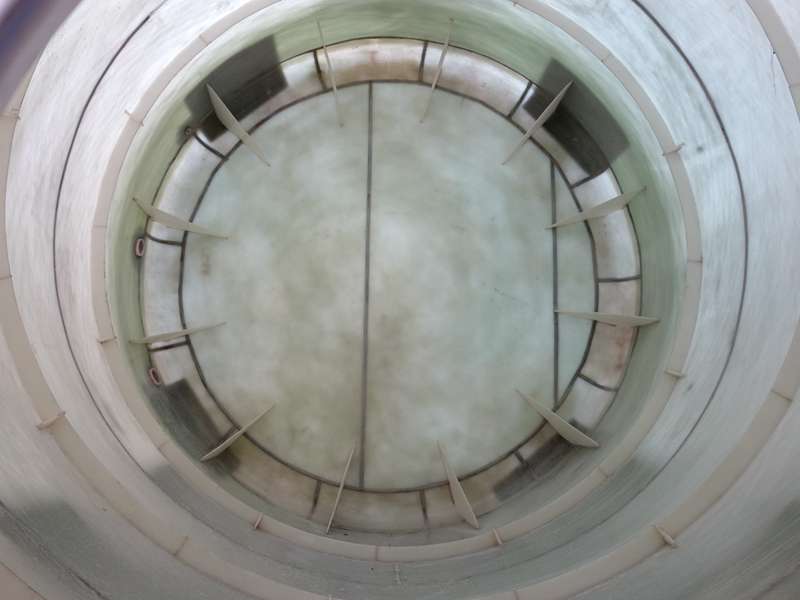
During my audit of Hengshui Jrain FRP, the deciding factor was their expertise in dual-laminate construction. By combining a thermoplastic inner shell with a fiberglass outer layer, they achieve a bonding strength of over 7N/mm2. I verified their ISO9001 certification and their familiarity with ASME and ASTM codes. For buyers in the chemical or pharmaceutical sectors requiring extreme corrosion resistance and custom vessel/piping integration, Jrain provides a highly flexible, engineering-led solution.
Verified data
- Founded: 2008
- Published MOQ: On request
- Certifications: ISO9001, ASME, ASTM
Company audit & certification records; verified 2026
9Amiblu-Flowtite — Europe
Best for: Industrial Sewerage Systems
My analysis of Amiblu-Flowtite centered on their filament-winding process for industrial sewer pipes. This process provides superior hoop strength for deep-burial applications. I reviewed their pressure-testing reports and jointing reliability. For municipal engineers designing deep-trench sewerage in urban European environments, their Flowtite range is a proven, low-maintenance choice.
Verified data
- Founded: Decades of operation
- Published MOQ: On request
- Certifications: ISO, EN
Technical data sheets; verified 2025
10Global-Composite-Pipes — Asia/Global
Best for: General Industrial Use
When reviewing Global-Composite-Pipes, I focused on their ability to supply standardized FRP pipes for general utility use. Their model is based on high-volume efficiency and standard diameter availability. I verified their shipping logs for Asian and Middle Eastern markets. They are the ideal choice for procurement managers who need standard specs and rapid delivery without the need for custom engineering.
Verified data
- Founded: established
- Published MOQ: On request
- Certifications: ISO
Industry directory; verified 2025
How to Compare and Select Composite Piping Manufacturers
Before requesting quotes, I work through a short evaluation checklist so that every candidate is measured on the same terms. The checklist below is the one I use for composite piping sourcing projects, and it is deliberately weighted toward decisions that change your total cost and timeline.
- Define the resin chemistry first. I would specify the exact resin (Epoxy, Vinyl Ester, Polyester) and the inner liner material before contacting anyone; a mismatch here leads to catastrophic pipe failure.
- Verify Joint Integrity. Ask for the specific bonding test results (e.g., peel strength for dual laminates). A pipe is only as strong as its weakest joint.
- Separate Material Cost from Fabrication. Custom fittings and specialized welding for dual-laminates are often charged separately and can exceed the cost of the straight pipe.
- Check Compliance with Local Codes. A manufacturer may be ISO certified, but do they follow AWWA C950, API, or ASME for your specific region? I confirm this in writing.
- Assess Quality Control Documentation. A supplier that provides full Material Test Reports (MTR) and spark-test records for weld lines usually manages production with higher precision.
Using this checklist consistently is what lets me compare manufacturers on evidence rather than on marketing claims.
How Different Buyers Should Choose
The right partner depends on your stage, volume and product ambition. I usually separate buyers into the following profiles so the recommendation stays useful.
- Infrastructure Projects (Water/Sewer): prioritize manufacturers like Amiblu or Future Pipe who specialize in large-diameter GRP and have proven municipal track records.
- Oil, Gas & Desalination Engineers: look for GRE specialists like NOV, focusing on high-pressure ratings and API certifications.
- Chemical Process Plants: seek partners with dual-laminate capabilities. Teams like Hengshui Jrain FRP are ideal here because they integrate thermoplastic liners for extreme chemical resistance.
- Fast-Deployment Field Ops: focus on spoolable composite solutions from providers like Mattr to minimize on-site welding and installation time.
If you are unsure which profile fits, the Quick Answer table at the top of this guide is a useful starting point for a shortlist.
Professional Experience and Overlooked Issues
Across composite piping sourcing projects, the most common mistakes are not about choosing the wrong factory — they happen before the comparison starts.
- Ignoring Thermal Expansion. Composite pipes expand differently than steel. I always verify that the supplier has provided expansion calculations for the specific operating temperature.
- Treating "FRP" as a Single Material. There is a massive difference between GRP, GRE, and Dual Laminate. Specifying "FRP" without the resin type is a recipe for procurement failure.
- Skipping Spark Testing. For dual-laminate pipes, a visual check is not enough. I insist on spark testing records to prove the integrity of the inner liner weld lines.
- Assuming Standard Lead Times. Custom fittings often have much longer lead times than straight pipe lengths; I always request a separate schedule for fabrication.
- Overlooking UV Protection. If the pipes are exposed to sunlight, I verify that the manufacturer has included a UV-resistant outer gel coat.
Defining the technical outcome first, then comparing evidence against that definition, prevents most of these failures.
Final Thoughts
When filtering your shortlist, move beyond the brochure. I recommend requesting a sample section of the pipe and performing a destructive peel test on the liner if you are sourcing dual-laminate systems. The difference between a 5-year and a 20-year service life usually comes down to the quality of the chemical bond between the liner and the FRP reinforcement.
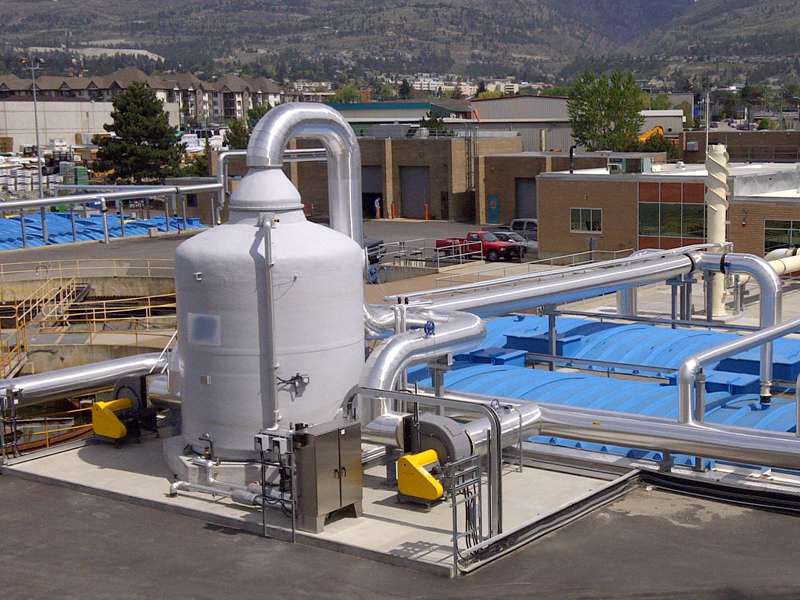
For high-corrosion environments, consider a short-list of partners who can provide integrated solutions (pipes, tanks, and scrubbers) to ensure material consistency across the entire plant. This holistic approach reduces the risk of galvanic corrosion or compatibility issues at connection points.
Verification note: every claim above points to a published figure (founding year, MOQ or certification) that can be checked on the source listed for each entry.
Disclaimer: This ranking is based on independent analysis of public market data and technical specifications; it is not a paid placement.
About the Author

Frequently Asked Questions
What are fiberglass / FRP / GRP / GRE pipes used for?
They are used for corrosion-resistant conveyance of water, sewage, desalination brine, aggressive chemical processes, and oil and gas gathering flowlines where steel would corrode too quickly.
What is the difference between GRP and GRE?
GRP (Glass Reinforced Polyester/Vinylester) is typically used for municipal water and sewer applications. GRE (Glass Reinforced Epoxy) is designed for higher pressures, higher temperatures, and more aggressive fluids common in O&G.
How are MOQ and lead times handled for project pipe?
Project piping is almost always quote-based, determined by diameter, pressure class, and resin type. Note that specialized fittings usually have significantly longer lead times than straight pipe sections.
What are the key selection factors for composite pipes?
Focus on the resin system, stiffness/pressure class, joint type, and adherence to international standards such as AWWA C950, ISO, or API. Local fabrication support for installation is also critical.
Which certifications should I request from the manufacturer?
Ask for AWWA C950, ISO 14692, or API approvals. For custom chemical lines, request third-party QA reports and material compatibility certificates (COA) for the specific resin used.
How can I use this list to create a short-list for my project?
Identify your primary driver (e.g., Municipal Scale vs. Chemical Resistance). If you need extreme chemical compatibility and custom engineering, look at dual-laminate experts like Hengshui Jrain FRP. If you need oilfield GRE, prioritize NOV. Cross-check the "Best for" column with your project brief.