

Choosing an FRP Scrubber: Application Fit and Specification Checks
THE BUYER'S GUIDE / SELECTION
Choosing an FRP Scrubber: Application Fit and Specification Checks
A buyer-focused guide to selecting an FRP scrubber. It covers which applications the confirmed product description names, the process data a supplier needs before design (medium, temperature, flow rate, pressure, earthquake, wind load and climate), glass fiber and top coat options, and which internal and external components can be included in the supply scope. Price, lead time and certifications are not covered here and have to be confirmed directly.

Application fit: the product description lists liquid storage, water treatment, FGD systems, chemical processing, pollution control, gas cleaning, gaseous emission control, waste incineration and power generation
Process design inputs: medium, temperature, flow rate, pressure, earthquake, wind load and climate conditions
Glass fiber selection: E-glass, with ECR glass fiber added when higher chemical resistance is needed
Exterior protection: a colored or semi-transparent top coat for UV resistance
Equipment type: process vessels, reactors, towers, absorbers, separators, Venturi, dual laminate scrubbers, tail gas scrubbers; size is customized
Supply scope: internals (spray banks, support beams, mist filters, packing, distribution systems, piping, ducting) and exterior items (ladders, platforms, railings, walkways, drainage, protection liner, electrostatic discharge), plus installation of exterior equipment
Choosing an FRP Scrubber: Application Fit and Specification Checks
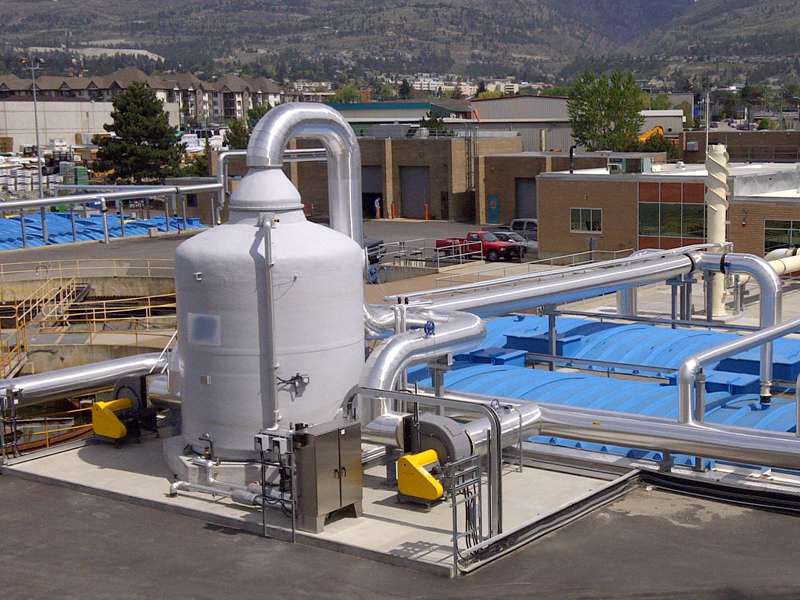
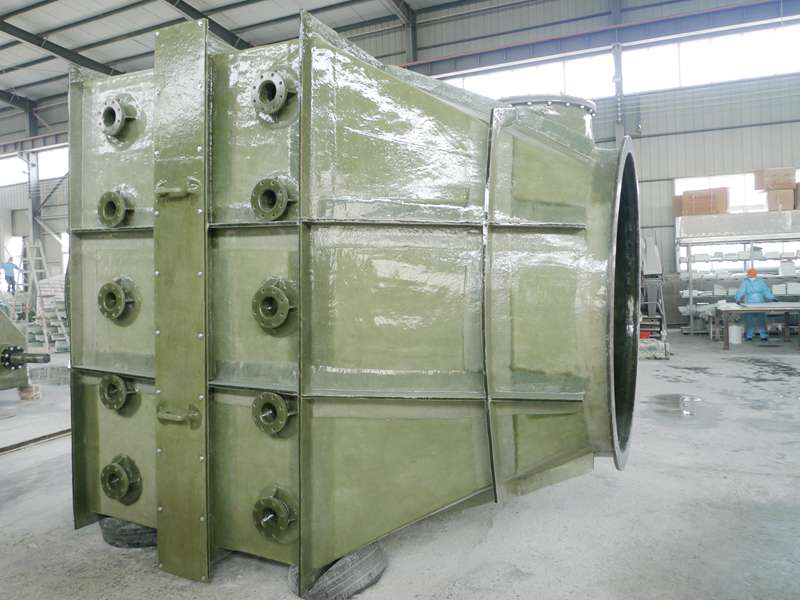
An FRP scrubber is not an off-the-shelf item. According to the confirmed product description, fiberglass scrubbers are a series of fiberglass towers, including process vessels, reactors, towers, absorbers, separators, Venturi units, dual laminate scrubbers and tail gas scrubbers. Size is listed as customized. For a procurement team, this means choosing the right FRP scrubber depends less on picking a catalog model and more on giving the supplier complete, accurate project data.
This guide explains how to check whether a fiberglass scrubber fits your application, what to specify, and where the available product information stops.
1. Confirm the application fit
The product description lists these uses for fiberglass scrubbers:
- Liquid storage and water treatment
- FGD (flue gas desulfurization) systems
- Chemical processing and pollution control
- Gas cleaning and control of gaseous emissions, especially polluted gases
- Waste incineration and power generation processes
If your project involves an FGD scrubber for a power or incineration line, an FRP design is a reasonable option to discuss. Ask for a project-specific review before you go further.
2. Understand why FRP is being considered
The product description compares FRP with metal and rubber-lined steel. It says FRP is lightweight, strong, can be produced in a wide range of diameters, and resists abrasion, chemical corrosion and rust, as well as very low and very high temperatures. It also says the smooth interior gives good flow characteristics and is easy to clean.
These are general material claims, not guarantees for your process. Chemical and temperature resistance depend on the specific medium and operating conditions. Treat them as reasons to evaluate FRP, then confirm them against your own process data.
3. Prepare the specification data the design depends on
The description says each new project is analyzed, and the system performance specifications are reviewed to select materials and construction methods. The design is then based on these requirements:
| Design input | What to provide |
|---|---|
| Medium | Gas and liquid composition, including corrosive or abrasive components |
| Temperature | Normal operating range and any upset or extreme conditions |
| Flow rate | Design gas and/or liquid flow |
| Pressure | Operating and design pressure or vacuum |
| Earthquake | Seismic requirements at the installation site |
| Wind load | Site wind design requirements |
| Climate conditions | Outdoor exposure, UV, ambient temperature extremes |
If any of these inputs are missing from your RFQ, expect the supplier to ask for them before quoting a design.
4. Check the material options
Two material options are described:
- Glass fiber type: ECR glass fiber can be used along with E-glass fiber when higher chemical resistance is needed. Ask whether your medium calls for this.
- Top coat: A colored or semi-transparent top coat can be applied to resist UV light and protect the exterior. This matters for outdoor installations.
Dual laminate scrubbers are also listed in the product range. If your process needs a dual laminate construction, state that in your enquiry.
5. Define the supply scope
An FRP scrubber package can cover more than the vessel. The description lists:
Internals and system components: internal and external piping, spray banks, support beams, mist filters, packing, distribution systems and ducting. These can be made in many shapes and configurations.
Exterior accessories: ladders, platforms, railings, walkways, drainage, protection liner and electrostatic discharge.
The description also says the supplier designs, produces and installs exterior equipment. Write down exactly which items you want quoted, and whether you need installation, so that competing offers cover the same scope.
6. What this guide does not confirm
Summary checklist
- Is the application one of those listed (FGD, gas cleaning, chemical processing, pollution control, incineration, power generation, water treatment, liquid storage)?
- Have you provided medium, temperature, flow rate, pressure, earthquake, wind load and climate data?
- Do you need ECR glass for higher chemical resistance, or a UV-resistant top coat?
- Is a dual laminate construction needed?
- Which internals and exterior accessories are in scope, and is installation included?
- Have price, lead time and any required certifications been confirmed in writing?
THE PEOPLE

About the author
THE COMPANY
No. 1289, Yingbin South Street, Jizhou District, Hengshui, Hebei, China
Jrain FRP, located at Hengshui City of China, is a professional manufacturer of composite product. We manufactured various fiberglass reinforced plastic (FRP) products since 2008 and still active in improving the product, process and market development. Until now we possess 5000m2 workshop, with winding machine, vacuum equipment and molds, etc. in it. We are certificated with ISO9001 Quality Management System. We are also equipped with related lab and professional FRP test equipment.…
About Us ↗Visit company website ↗YOUR NEXT STEP
Bring your brief. Start a useful conversation.
Use case, specification, quantity and delivery window: make the next conversation specific.
Latest news
-
FRP Cover FAQ: Types, Sizes and Project DesignNewsNov.02,2026
-
FRP Fitting FAQ: Specifications, Applications and Ordering Questions AnsweredNewsOct.28,2026
-
Choosing Mandrels and Molds: Application Fit and Specification ChecksNewsOct.23,2026
-
Choosing Clarifiers & Settlers: Application Fit and Specification ChecksNewsOct.23,2026
-
Choosing an FRP Scrubber: Application Fit and Specification ChecksNewsOct.22,2026
-
FRP Solutions for Optimizing Flue Gas Desulfurization InfrastructureNewsJul.01,2026