



Choosing Mandrels and Molds: Application Fit and Specification Checks
THE BUYER'S GUIDE / SELECTION
Choosing Mandrels and Molds: Application Fit and Specification Checks
A buyer-focused guide to selecting Mandrels and Molds for FRP pipe, tank and fitting production. It covers process fit (filament winding vs. hand lay-up), confirmed size ranges, mandrel material options, documented steel mandrel tolerances, joint types and demolding features, and says which points buyers must confirm directly because they are not in the published product information.

Production process fit: filament winding (pipe mandrels and cylinder tank molds with a winding machine) or hand lay-up (fitting molds)
Size range: pipe mandrels DN50 mm–DN4000 mm; workshop steel tank molds DN500–DN4000 mm; larger tank molds built on site from timber, plywood, mold rings, etc.
Mandrel material: pure steel, or steel with an FRP surface that can be repaired for small defects
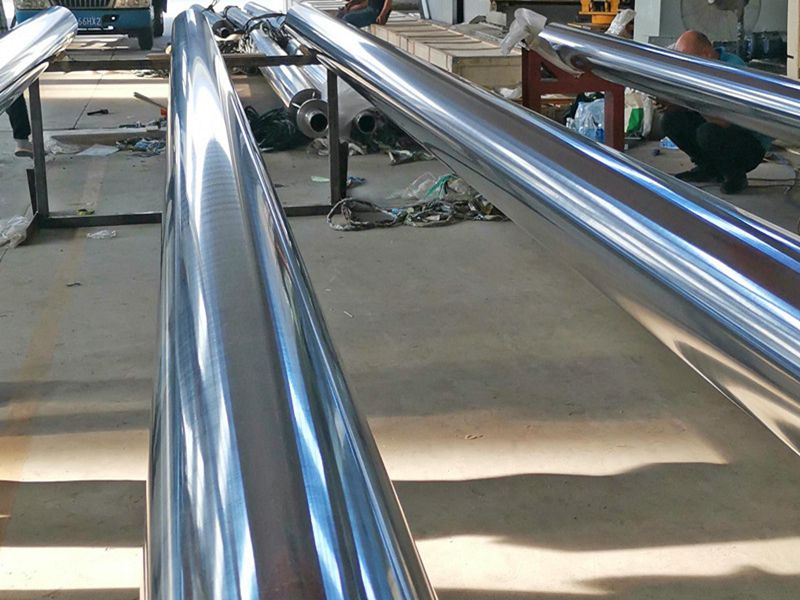
Published steel pipe mandrel capability: wall thickness >=7 mm, taper +/-1.0 mm
Joint types: plain ends, adhesive bonded, rubber seal lock joint, rubber seal joint, bell and spigot joint, etc.
Demolding features: smooth surface, taper and demolding agent
Need for customized fitting molds (flange, elbow, tee, tank head), contractile molds or other special molds
Mandrels and Molds set the shape, size and surface of fiberglass reinforced plastic (FRP) pipes, tanks and fittings. Choosing the right tooling starts with your own production needs: the process you use, the diameters you make, the joint types you need and how long you expect the tooling to last. This guide matches those needs to the published product information and points out where you need to ask for more details.
1. Start with your production process
The product information describes two main uses:
- Filament winding: Pipe mandrels and cylinder tank molds work with a winding machine to make fiberglass pipes and tanks. The mold rotates while the winding machine winds the fiberglass onto it.
- Hand lay-up: Molds for fittings are mainly used in hand lay-up.
If you don't use either process, check with the supplier before you assume the tooling will suit your line.
2. Confirm the size range
| Tooling type | Published range or scope | Material |
|---|---|---|
| Pipe mandrel | DN50 mm – DN4000 mm | Pure steel, or steel with FRP |
| Tank mold (workshop tanks) | DN500 – DN4000 mm | Steel |
| Larger tanks | Molds can be made on site using timber, plywood, mold rings, etc. | Site-built |
| Fitting molds | Customized flange, elbow, tee, tank head molds, etc. | Steel |
If your tank diameter is above the workshop tank mold range, the published option is a mold built on site, not a steel workshop mold. Plan for that in your project scope.
3. Choose the pipe mandrel material
- Steel pipe mandrel: Published capability is a wall thickness of >=7 mm and a taper of +/-1.0 mm. If these figures matter to your process, confirm how they apply to your diameter and length.
- Steel + FRP pipe mandrel: According to the product description, this type can be used for longer because the steel structure gives strong support, and small defects in the FRP surface can be repaired.
If you expect long production runs and want to repair small surface defects, the steel + FRP option is worth asking about. The product information doesn't give numbers for service life, so ask the supplier about your expected usage.
4. Match the joint type
The published description says the pipe mandrel can produce these connection types:
- Plain ends
- Adhesive bonded
- Rubber seal lock joint and rubber seal joint
- Bell and spigot joint, etc.
State the joint type you need when you send your inquiry, especially if your end design is not on this list.
5. Review demolding and surface features
According to the product information, a smooth surface, a certain amount of taper and a demolding agent make demolding easier. This saves labor and time and improves product quality. The tooling is also described as accurate, not easy to deform and durable. Ask for the details behind these claims if you need them for your quality plan.
6. Consider special tooling
Besides the normal molds, contractile molds are also available. Other special molds can be made on request. If your part geometry doesn't fit a standard mandrel or fitting mold, describe it in detail in your request.
What this guide does not cover
The published material says the mandrels and molds conform to national standards, but it doesn't name a specific standard. It also doesn't include prices, lead times, certifications for the tooling, or tolerances for tank and fitting molds and steel + FRP mandrels. Confirm these directly with the supplier before you buy. They are not guaranteed here.
Buyer checklist for Mandrels and Molds
- Process: filament winding or hand lay-up
- Required DN size, and whether it is within the published range
- Mandrel material: steel or steel + FRP
- Tolerance needs compared with the published steel mandrel figures
- Joint or connection type
- Need for contractile or other special molds
- Standards, pricing and delivery to confirm in writing
THE PEOPLE

About the author
THE COMPANY
No. 1289, Yingbin South Street, Jizhou District, Hengshui, Hebei, China
Jrain FRP, located at Hengshui City of China, is a professional manufacturer of composite product. We manufactured various fiberglass reinforced plastic (FRP) products since 2008 and still active in improving the product, process and market development. Until now we possess 5000m2 workshop, with winding machine, vacuum equipment and molds, etc. in it. We are certificated with ISO9001 Quality Management System. We are also equipped with related lab and professional FRP test equipment.…
About Us ↗Visit company website ↗YOUR NEXT STEP
Bring your brief. Start a useful conversation.
Use case, specification, quantity and delivery window: make the next conversation specific.
Latest news
-
FRP Cover FAQ: Types, Sizes and Project DesignNewsNov.02,2026
-
FRP Fitting FAQ: Specifications, Applications and Ordering Questions AnsweredNewsOct.28,2026
-
Choosing Mandrels and Molds: Application Fit and Specification ChecksNewsOct.23,2026
-
Choosing Clarifiers & Settlers: Application Fit and Specification ChecksNewsOct.23,2026
-
Choosing an FRP Scrubber: Application Fit and Specification ChecksNewsOct.22,2026
-
FRP Solutions for Optimizing Flue Gas Desulfurization InfrastructureNewsJul.01,2026